Most New Year resolutions for real estate pros sound the same: post more consistently, improve listing photos, respond faster to leads. By March, you're back to the same workflow. And still wondering why some agencies produce half as much but are somehow twice as visible.
Here's what we learned working with thousands of real estate professionals across Europe in 2025: visibility isn't a volume problem. It's a proof problem.
Your best listings are on ImmoScout24 and your local portals. You're showing up on Google. But when buyers compare options, they're not just comparing properties. They're comparing the agents behind them. And the question they're asking isn't "who posted the most?" It's "who looks like they know what they're doing?" That judgment happens in seconds. Before they call. Before they inquire. Often before they even click. 2026 is the year that gap becomes decisive.
What Changed in 2025
Buyer behavior splintered. Portals are still where property search starts. But the journey now includes stops most agents aren't accounting for.
Buyers now ask AI tools like ChatGPT questions about neighborhoods before they search portals. Google is showing AI-generated answers at the top of search results instead of just links. Buyers are forwarding properties privately in WhatsApp and email. And while trust is built in real life, it’s validated digitally: decision-makers (partners, parents, investors) scan your proof across touchpoints before they ever speak to you.
The common thread: trust is being formed or lost across multiple surfaces before you ever speak to a prospect. Portal listings still matter. But if your visuals look inconsistent, your descriptions feel generic, and your brand presence is fragmented, you're losing mandates to agents who simply look more credible.
The Real Problem: The Consistency Gap
After analyzing hundreds of agency workflows across DACH in 2025, we kept seeing the same pattern: great agencies with fragmented execution. Professional portal listings. But rushed visuals on follow-up emails. Polished hero shots. But mismatched aspect ratios when the same property gets shared elsewhere. Strong local expertise. But descriptions that read like they were copy-pasted from ChatGPT.
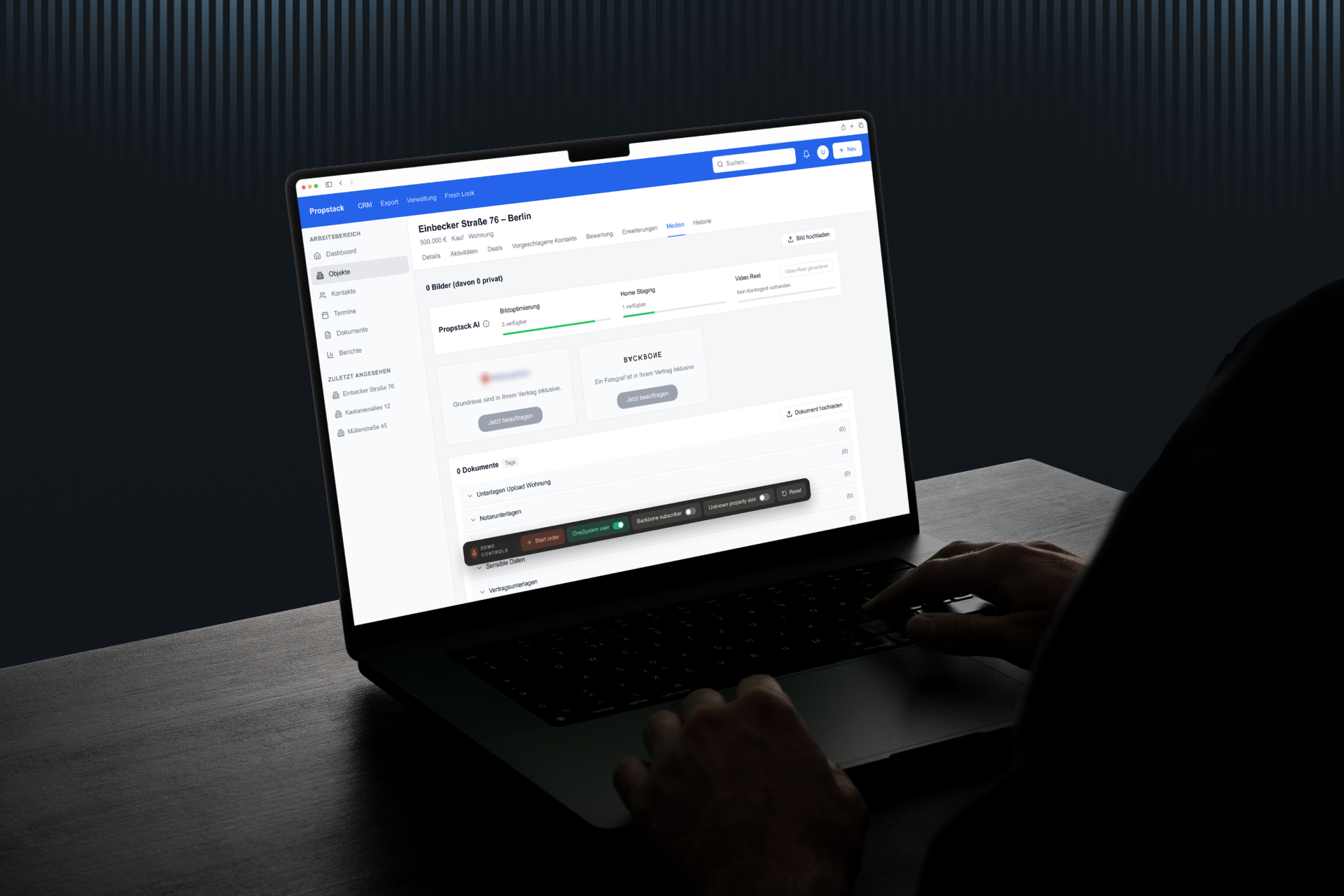
The problem isn't effort. It's infrastructure. Most teams operate with one system for photography, another for editing (Photoshop or whatever AI tool looked good that week), ChatGPT for descriptions, and separate tools for email, CRM, and scheduling.
Each piece works. But together, they create what we call The Consistency Gap. The visible difference between agencies that have systems and agencies that are duct-taping workflows together. Buyers can't articulate it. But they feel it. And it shows up in who they call first.
What the Best Teams Are Doing Differently
The agencies dominating their markets in 2025 weren't posting more. They were operating with one core advantage: repeatable systems that produce professional proof at every touchpoint. Here's what that looks like practically.
Visual consistency as a standard, not a goal
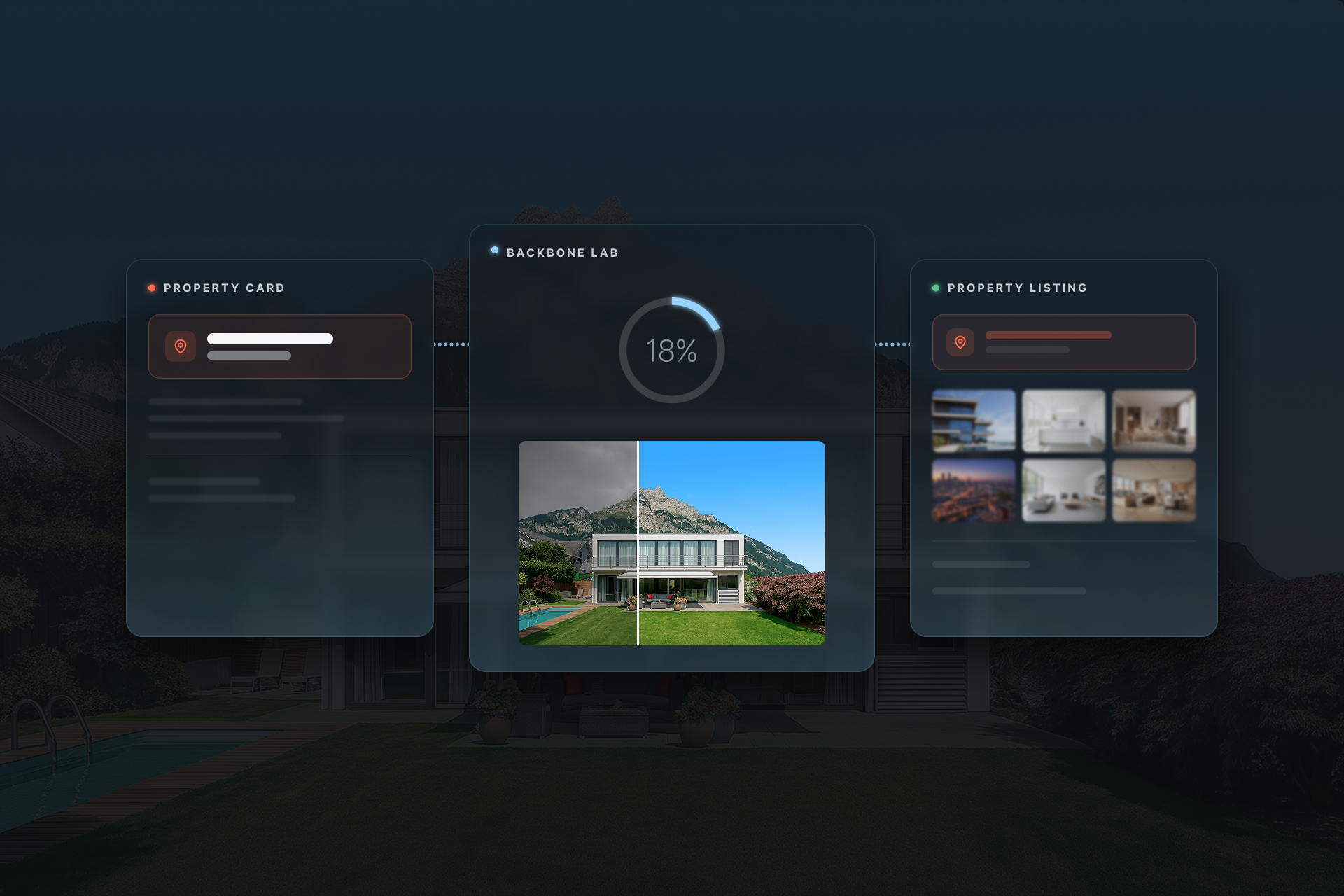
Properties with professional visuals sell faster. Everyone knows this. But the type of production needs to match the mandate. For a luxury listing, speed isn't the priority—perfection is. You need high-end retouching, blue skies, and flawless lighting. For a competitive mid-market rental, speed is everything—you need it online today. The best teams have built infrastructure that handles all scenarios.
They use instant editing tools to declutter rooms or refresh wall colors when speed wins the mandate. And they seamlessly switch to professional manual editing services when the property demands a premium finish. Why it works: one system, one quality bar. They don't switch platforms to switch gears. They just choose the right production level for the asset.
Content that actually differentiates you
Most property descriptions in 2025 sounded identical. Because most were AI-generated. And most agents used the same prompts. "Prime location." "Excellent investment opportunity." "Must see." Buyers scroll past. AI search engines don't cite it. And you blend into every other listing.
What stands out: specificity, local knowledge, proof. Not: "Beautiful 3-bedroom apartment in great neighborhood." Instead:"This 3-bedroom in [District] had 12 showings in 5 days.We updated the kitchen, priced it €8K under comparables to create urgency, and staged the awkward corner. It sold to a young family in 28 days—first home, pre-approved.”
That's the kind of content AI engines cite when someone asks about your market. That's the kind of content buyers forward to decision-makers. That's proof, not filler.
Formats that work everywhere
Portal listings are foundational. But the best agencies aren't recreating work for every channel. They create once. Use everywhere. The same professional photos work on portals, in email campaigns, in follow-ups. The same case study becomes a neighborhood insight, a market update, a referral asset.
The operational shift: stop treating every channel as a separate project. Build content that's reusable, searchable, and adaptable.
What to Measure in 2026
Portal performance still matters. But add these:
These measure trust at scale. Which is what 2026 visibility is really about.
The 2026 Resolution
Stop resolving to produce more. Start resolving to produce better systems. The agencies winning mandates in 2026 won't be the ones posting the most or spending the most. They'll be the ones who built infrastructure that turns every property into credible, consistent proof. On portals, in search results, in forwarded messages, across every surface where trust gets built.
A diagnostic: pull up your last 5 listings. Look at the visuals. Read the descriptions. Check how many channels each reached. Do they feel like they came from the same broker? Do they demonstrate expertise or just inventory? Did they take the right amount of time for the mandate?
If the answers don't feel right, the opportunity isn't in working harder. It's in rethinking the system. The infrastructure you build this quarter will determine which mandates you win this year. Build it now.