Real estate
PropTech
AI

On-Site Area Measurement: The 10% Line Every Listing Needs to Clear

A property listed with 10% more floor area than it actually has is not a rounding error. In Germany, courts treat that gap as a material defect whether the property is for sale (a Sachmangel) or for rent (a Mietmangel), and whoever put the number in the listing, the owner selling or the landlord letting, carries the liability. Buyers and tenants alike can walk away, reduce what they pay, or claim a refund, and the agent who supplied the number is the one who has to explain it. Here's why on-site measurement stopped being optional, and how AI search is starting to reward it too.

Reading time

5

min

Published on

August 21, 2026

Written by

Camille Zimmermann

Marketing Manager

Share this article

LinkedIn iconX iconIcon facebook

The mandate risk nobody budgets for

Picture a two-bedroom apartment marketed at 95 square meters, a figure pulled from an exposé written years earlier. Eighteen months after closing, a mortgage revaluation measures it at 84. The buyer's lawyer sends a letter, and the agency that produced the original listing is the one asked to show how that number was reached. Nobody acted in bad faith, the number was just never actually measured. This is standard German case law on area deviations, not an edge case, whether it's a sale (see Engel & Völkers' overview of the relevant rulings) or a rental, where the same 10% line lets a tenant reduce the rent for as long as they live there (see the BGH rulings on rental area deviations).

Most listings inherit their floor area from an older exposé, a public registry entry, or a figure the seller or landlord provides. That's fast, and it works right up until someone checks it: a buyer's lawyer, a bank valuation, or a resale a few years later. Registries and old floor plans often predate renovations, extensions, or a change in how the area was calculated, which is exactly how a small gap becomes a 10%-plus dispute.

When that happens, the paper trail points to whoever put the number in writing first. The seller or landlord carries the formal liability, but the agency that produced the marketing materials is the first one asked how the figure was reached.

This isn't only a German story. Every European market has its own property area disclosure norms and its own version of the same dispute: a buyer or tenant who feels the square meters they're paying for don't match what they got. Germany simply has the sharpest legal line drawn around it, which makes it the clearest reason to get this right everywhere.

Old exposé floor plan at 95 m² versus on-site DIN 277 measurement at 84 m² — an 11.6% deviation.

AI search is reading your listings too

Buyers increasingly meet a listing for the first time inside an AI answer, not a search results page, before they ever click through to a portal or a website. Google's AI Overviews and tools like ChatGPT pull structured property data directly into their answers, and they reward consistency: the same measurement, the same floor plan, the same numbers, repeated identically everywhere that property appears.

An estimated figure that's slightly different on the portal, the brochure, and the agency's own site isn't just a legal risk anymore. It's the kind of inconsistency these systems are learning to discount when deciding which listings, and which agencies, to treat as a reliable source. Precision has quietly become a visibility signal, not just a legal one.

Listing, brochure and agency site all showing 92 m² — a verified match in AI search results.

What accurate on-site measurement actually looks like

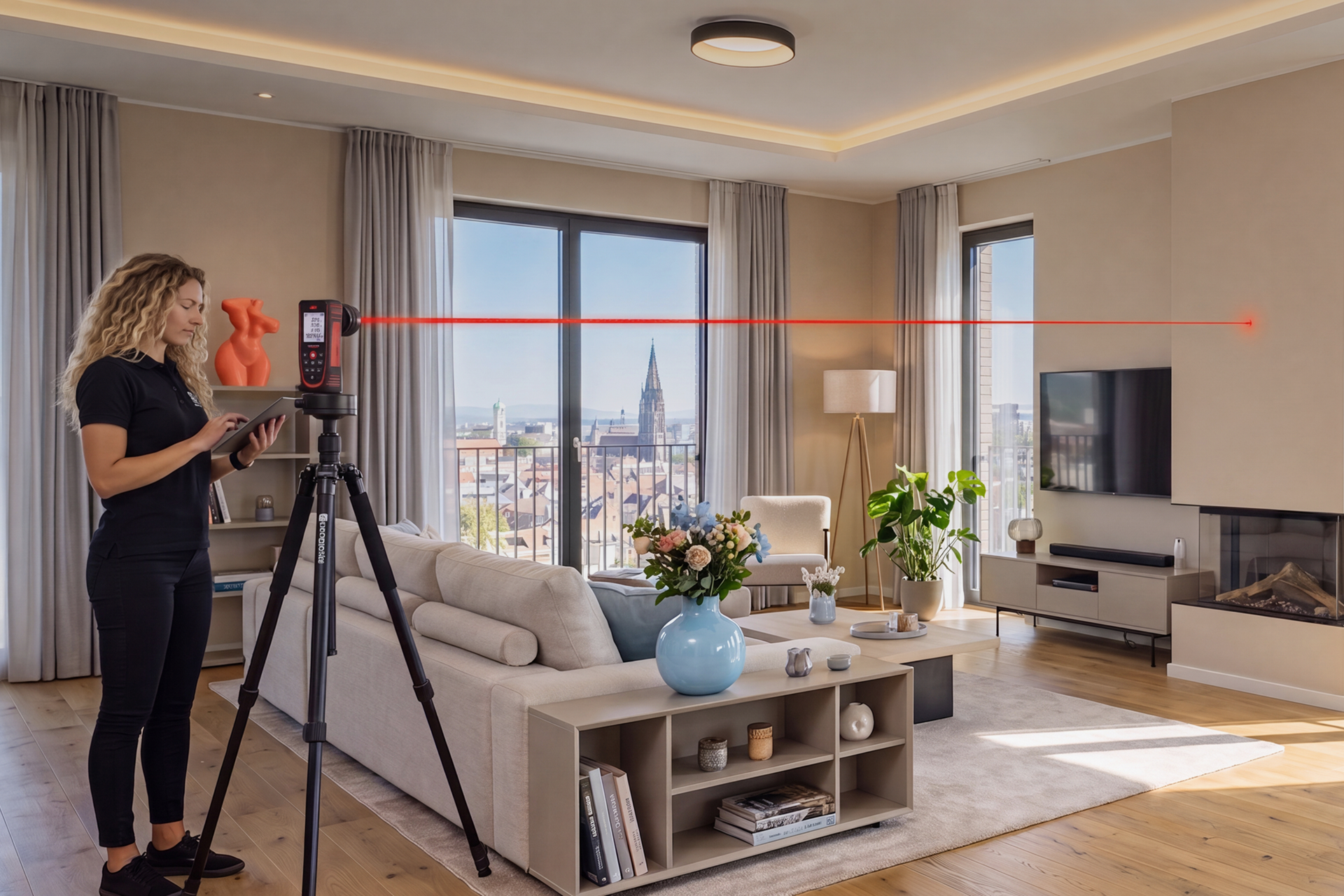
Getting this right doesn't mean adding a separate appointment to an already packed schedule for yourself. It means the property gets measured on-site, against the DIN 277 standard, by a specialist rather than estimated from an old document. The output is a documented, defensible number that matches the floor plan exactly, not a figure that lives in a PDF nobody can trace back to a method. This is also the standard, traceable floor plan measurement that holds up if a buyer, a bank, or a court ever asks to see the working.

That's the difference between "the listing said 92 square meters" and "here's exactly how we measured 92 square meters, and here's the plan that proves it." One of those holds up in a dispute. The other doesn't.

One order, one documented number, wherever it's used

This is exactly why Backbone lets you order on-site measurement in the same booking as your photos and floor plan, through the On-Site Area Report. You get an instant price estimate right away, then a measurement specialist reaches out within 3 business days to schedule the visit and measure the property against DIN 277. The final invoice is only issued once that visit confirms the real numbers, so there are no surprises before or after, and the figure that lands in your listing, your floor plan, and your files is the same one, every time.

Floor plan & measurement

On-site area report

1Instant price estimate at order time
2Specialist schedules the visit within 3 business days
3Measured against DIN 277 on-site
4Final invoice issued once numbers are confirmed
Delivery4–10 business days
StandardWoFlV / DIN 277
CertificationDekra
Booked withPhotos & floor plan

For an agency, that's one fewer number to double-check and one you can stand behind if anyone ever asks how it was reached. For a buyer reading the listing on a portal, in an AI-generated answer, or on your own site, see our guide to optimising property listings across Europe's portals for how that consistency plays out portal by portal. It's the same figure every time, which is exactly what a judge and an AI system are both looking for.

Order an on-site measurement for your next listing. Add it to your next booking →

Thank you! Your submission has been received!
Oops! Something went wrong while submitting the form.
HomeBlog
-
On-Site Area Measurement: The 10% Line Every Listing Needs to Clear

Related blog articles

Frequently asked questions

What is the legal floor area deviation threshold in Germany?
Arrow icon

A deviation of more than 10% between the declared and actual living area is generally treated as a material defect under German law, a Sachmangel for a sale or a Mietmangel for a rental, giving buyers grounds to withdraw, reduce the price, or claim a refund, and tenants grounds to reduce the rent for as long as they live there.

Who is liable if a listing's floor area turns out to be wrong: the seller, the landlord, or the agent?
Arrow icon

The seller or landlord typically carries the formal liability for the accuracy of the declared area, since it's their contractual statement. In practice, the agency that produced the marketing materials and the number is the first to be asked how it was calculated.

Is estimating floor area from an old floor plan or public registry good enough?
Arrow icon

Not for a number that ends up in a contract. Registry data and older floor plans often predate renovations, extensions, or measurement standard changes, which is exactly how small gaps become 10%-plus disputes years later.

Does floor area accuracy actually affect how AI search engines treat a listing?
Arrow icon

AI-generated answers increasingly pull property data directly from structured listing sources, and they favour information that's consistent across every place it appears. A measurement that's documented once and repeated identically everywhere is easier for these systems to trust than one that varies from portal to portal.

How long does it take to get a property measured after ordering?
Arrow icon

You can order on-site measurement alongside your photos and floor plan in one booking. A specialist reaches out within 3 business days to schedule the visit, and your invoice is finalised once the on-site measurement against the DIN 277 standard is complete.

How is on-site measurement different from what's normally included in a floor plan order?
Arrow icon

A floor plan shows layout. On-site measurement is the documented, standard-based process behind the numbers on that plan. Ordered together, they produce a single, traceable figure instead of two documents that might not agree.